Systems Change Seeks the Cure. Direct Service Provides the Treatment.
A cure that never arrives in time is morally insufficient. Treatment that never asks what keeps causing the harm is incomplete.
Every field has its false choices. In the nonprofit sector, one of the most persistent pits direct service against systems change. Direct service is described as compassionate but limited: it helps people cope without altering the forces that created the need. Systems change is cast as the more ambitious work: policy, institutions, funding structures, and public will.
There is truth in the distinction, but danger in turning it into a hierarchy. People living with the consequences of an unjust or ineffective system cannot wait for its redesign. At the same time, meeting immediate needs without confronting their causes can make inequity more tolerable rather than less common. Systems change seeks the cure. Direct service provides the treatment. A healthy social sector understands that we need both and that, at their best, they are not separate enterprises at all.
What direct service makes visible
Education makes the tension especially clear. We often hear some version of the question, “Why can’t school be more like Horizons?” Horizons is a community-based network of long-term summer and out-of-school-time programs. Students return year after year to small classes, project-based learning, swimming, meals, and adults who know them well. The setting is joyful and demanding; children have room to take risks, recover from mistakes, and discover what they can do.
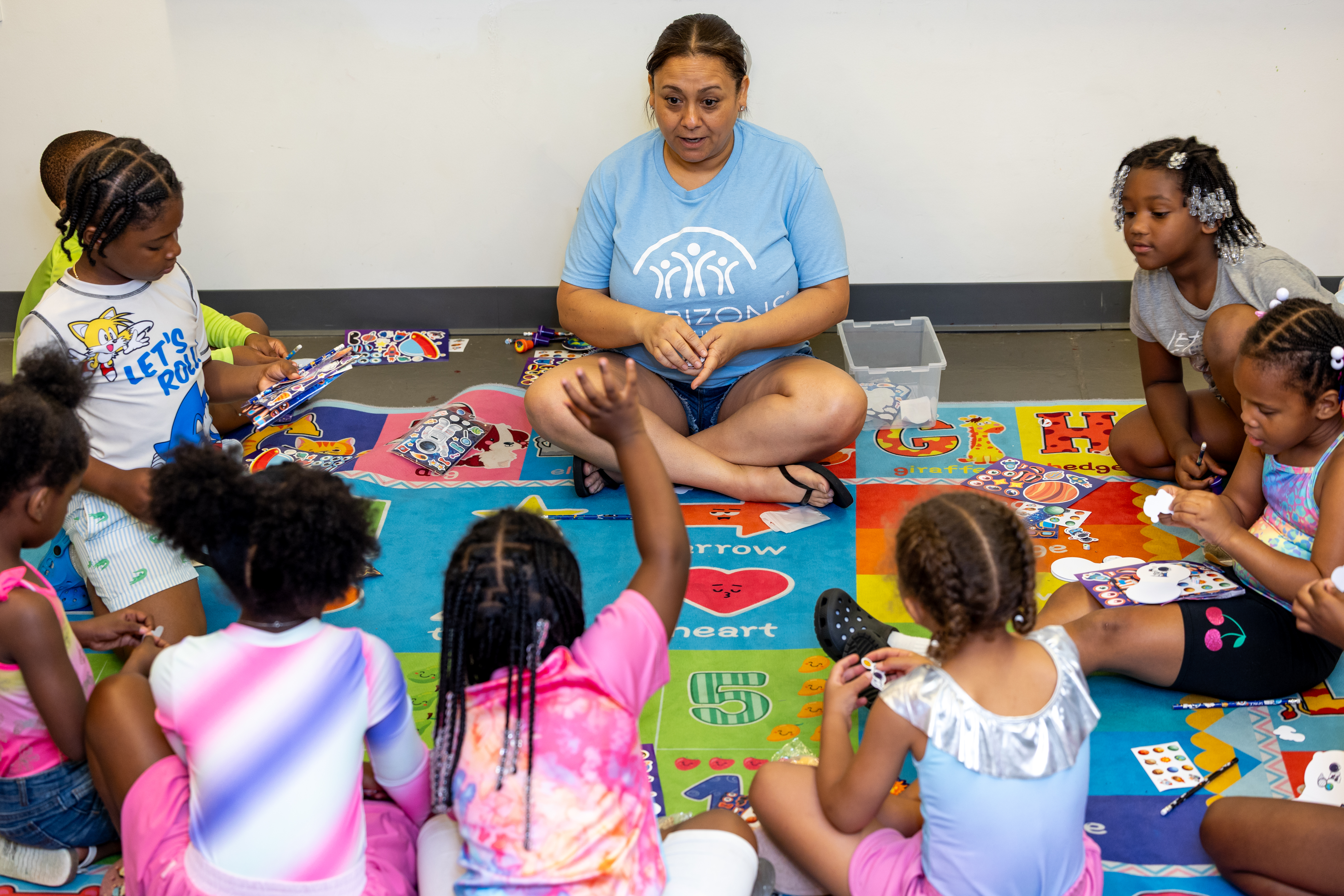
It would be simplistic to treat a six-week summer program as a blueprint for an entire public education system. Schools carry responsibilities and constraints that out-of-school-time programs do not. But it would be equally shortsighted to dismiss what such programs reveal. They show what becomes possible when young people have more time, strong relationships, a sense of belonging, engaging learning, and continuity across years.
Across the Horizons network, students gain, on average, the equivalent of roughly seven to nine weeks of learning in reading and math during a six-week summer. Over time, the accumulated effect is far more important than any single summer: students build academic skills, confidence, agency, and durable relationships. More than 90 percent of participants graduate from high school, and about three-quarters enroll in college. Those outcomes are not the product of a single intervention or a heroic adult. They grow through sustained conditions that allow potential to compound.
Why community-centered reform matters
Change works best when communities help create the conditions in which children thrive. Horizons programs share a common model and standards, but each is rooted in local institutions, families, educators, and assets. That balance of clear commitments paired with local ownership is not a compromise in quality. It is often the source of quality.
This matters in a country whose education “system” is actually thousands of systems shaped by local history, governance, culture, and trust. Research by Learning Heroes and others shows that many people believe that education is failing nationally while valuing their child’s school and teacher. This creates a fundamental disconnect: reform that arrives as a technical solution to be implemented on a community, rather than work built with a community, may be sound on paper and still fail in practice.
A community-centered approach starts with different questions: What do young people here need to flourish? Who gets to define success? Which commitments should be shared, and which decisions should remain local? How do families, schools, nonprofits, and public institutions act as collective caregivers of children’s opportunity?
Treatment can help create the cure
Direct service can do more than alleviate harm in the short term. It can protect human potential while larger systems evolve. It can make abstract inequities visible in individual lives. It can generate evidence about the conditions that produce better outcomes. It can build local capacity and public trust. And it can develop people who understand, from experience, what a better system feels like.
At Horizons, alumni return as counselors, teachers, volunteers, site leaders, and board members. Some have helped launch new programs and there are seats reserved for alumni on the national board. Their leadership is not a sentimental side benefit. It is systems change in human form. People who were once recipients become designers, decision-makers, and stewards of the institutions that shaped them.
The same pattern can appear across human services. A workforce program may meet an immediate need for stable employment while revealing how transportation, caregiving, scheduling, or hiring practices exclude people. A housing organization may keep a family safe tonight while generating knowledge that changes local policy tomorrow. Treatment becomes a bridge to cure when organizations capture what they learn, share power with the people closest to the problem, and use that knowledge to influence institutions and resource flows.
The question is not “Direct Service or Systems Change?”
Not every direct-service organization must become a policy shop, and not every systems-change organization must operate programs. The goal should be to build an ecosystem in which those roles inform and strengthen one another.
For funders and nonprofit leaders, that requires resisting the impulse to value scale over depth, novelty over continuity, or policy influence over lives changed. We should ask whether urgent needs are being met now; whether the work is producing knowledge others can use; whether communities hold meaningful authority; whether institutions are adapting; and whether participants have pathways into leadership. We should fund the connective tissue of learning, evaluation, relationship-building, and patient collaboration that allows treatment to inform cure.
Systems change seeks a world in which fewer people need the treatment. Direct service insists that no one should be sacrificed while we pursue it. The most durable progress comes when we honor both truths: relieve suffering and expand opportunity now, while learning from that work how to change the conditions that made it necessary.